


BioFlux™ Thermal Pretreatment technology
Unlocking low-cost feedstocks and leading conversion costs for SAF production
Sulzer’s BioFlux Thermal Pretreatment Technology (TPT) enables the use of challenging feedstocks such as used cooking oil and animal fats for the production of sustainable fuels. By drastically reducing contaminants like metals, phosphorus, and chlorides, BioFlux prepares fats, oils, and greases (FOGs) for efficient hydroprocessing. The result: reliable production of sustainable aviation fuel (SAF) at significantly lower costs and carbon intensity.
Enables low-cost feedstocks
Processes even highly contaminated fats and oils, including Category 1 tallow
Superior economics
Cuts hydrogen use by up to 50%, lowers CAPEX/OPEX, and unlocks renewable naphtha revenues
Proven and flexible technology
Operates at scale with standard refinery equipment, no catalysts needed
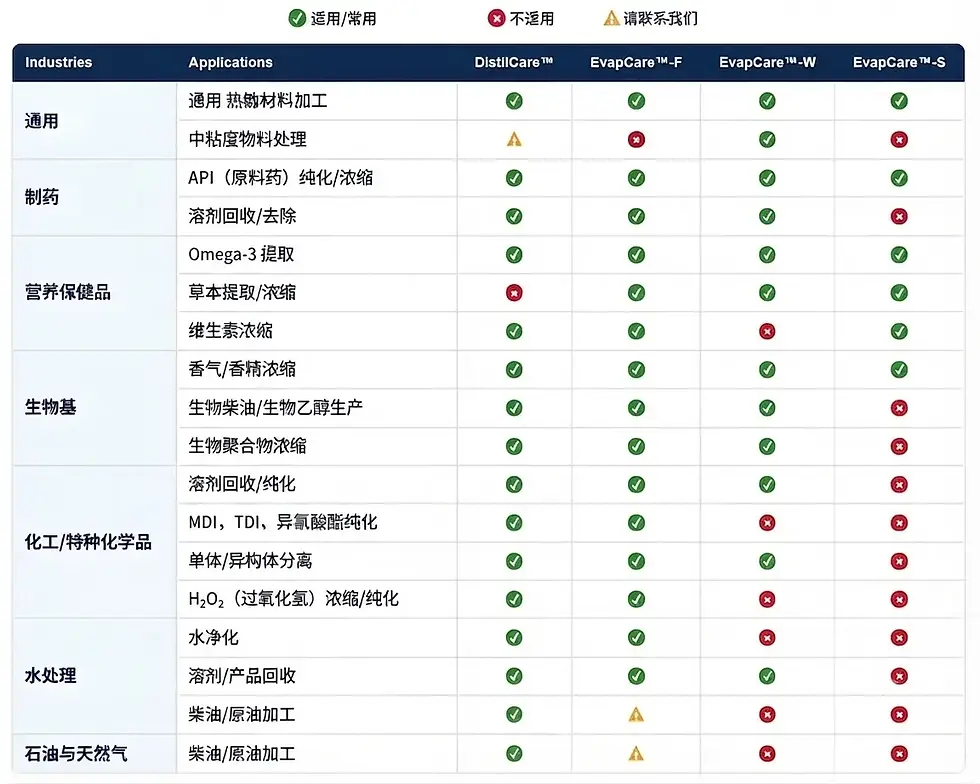

典型应用概览

主要优势
Excellent performance/cost ratio
Improved column performance, increased capacity, and reduced energy consumption
Customer specific columns based on computer simulations and in-house pilot plant testing
主要应用
Efficient design including demister to limit entrainment of liquid by the gas
Optimized hydraulics leading to lower pressure drop across the unit
Flexible scope of supply including key equipment or full turnkey modular solution
主要优势
Up to 15% lower production costs compared to conventional processes, thanks to natural gas savings and renewable naphtha credits
Up to 96% metals, 99% phosphorus, 99.9% chlorides, and 50% of oxygen eliminated, enabling smooth hydroprocessing
No catalyst required
Capable of pretreating difficult waste fats and oils, including Category 1 tallow
Enables co-processing of bio-feedstocks in existing hydrotreaters
主要特征
Almost complete conversion of triglycerides to free fatty acids and PIONAs, improving downstream processing
Uses familiar refinery equipment
Rapid deployment from concept to engineering to modular plant supply within 24 months
Seamlessly integrates with hydrotreating and hydrogen generation for optimized economics and sustainability
下载我们的技术资源

联系专家
What makes BioFlux™ Thermal Pretreatment different from conventional pretreatment?
BioFlux TPT uses a thermal cracking approach instead of physical refining. This allows the use of high-impurity feedstocks and avoids separating out impurities, converting them to SAF instead.
What feedstocks can be processed with BioFlux™ TPT?
The technology has been proven for a wide range of fats, oils, and greases, including used cooking oil (UCO), distillers corn oil (DCO), soybean oil, palm oil by-products, and even high-impurity animal fats that conventional methods cannot handle.
How does BioFlux™ TPT improve hydrogen efficiency?
By removing up to 50% of the oxygen content in the pretreatment stage, the technology significantly reduces the hydrogen demand in hydroprocessing. This lowers both operating costs and carbon intensity.
What are the economic advantages?
Compared to conventional pretreatment and hydrotreating, BioFlux TPT can reduce overall production costs by up to 15%. Key drivers include lower hydrogen consumption, reduced natural gas use, and added revenues from renewable naphtha by-products.
Is BioFlux™ TPT proven?
Yes. A 10 kt/a demonstration plant in Jackson, Mississippi has validated the process.

最新帖子

Add a Title
- 第 1 頁


