EcoStyrene™: Transforming Contaminated Polystyrene Waste into Ultra-Pure Styrene

Introduction
Polystyrene (PS) is everywhere from food packaging and disposable cups to insulation panels and electronics. Yet PS recycling has long lagged behind other plastics, primarily due to high levels of contamination and the technical difficulty of purifying waste-derived styrene. Sulzer’s EcoStyrene technology is redefining what’s possible: turning even heavily contaminated polystyrene waste into ultra-high purity styrene monomer, closing the loop for circular, food-grade plastics.
Why EcoStyrene Is a Game-Changer
Processes Highly Contaminated Waste: EcoStyrene is uniquely equipped to recycle PS waste streams that traditional approaches cannot handle including those with dyes, flame retardants, food residues, and other legacy additives.
Ultra-Pure Styrene Output: Delivering >99.95% styrene purity, EcoStyrene output meets and exceeds strict food-contact and industrial standards, enabling “waste-to-virgin” closed-loop recycling.
No Chemical Adsorbents Required: Unlike many purification systems, EcoStyrene uses a proprietary separation process that removes impurities without added chemicals, simplifying operations and reducing costs.
Feedstock Flexibility: The process is robust to highly variable feedquality meaning municipal PS waste, packaging, or construction residue are all in scope.
Boosts Global Recycling Rates: By finally making contaminated PS recyclable, EcoStyrene enables dramatic increases in closed-loop recycling rates for polystyrene worldwide.
How the Process Works
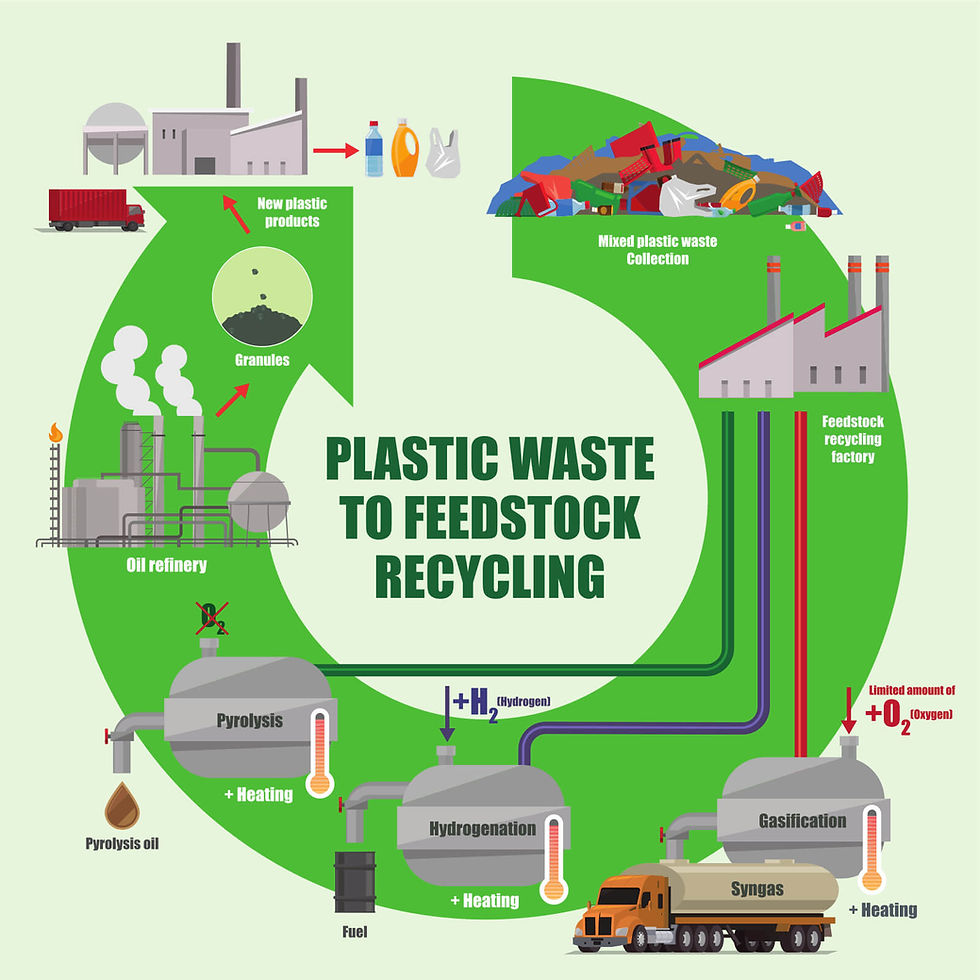
EcoStyrene combines advanced depolymerization and proprietary extractive distillation. Here’s what sets it apart:
Depolymerization: Waste polystyrene is chemically broken down into its styrene monomer, separating the core material from colorants, additives, and contaminants.
Hybrid Separation: A custom distillation and separation process beyond conventional rectification removes even closely-boiling impurities (like o-xylene or phenyl acetylene), achieving food-grade styrene monomer with no need for chemical adsorbents.
No External Chemicals: All purification is done via innovative, energy-efficient separation, minimizing environmental impact and plant complexity.
Direct Integration: The resulting styrene monomer is suitable for immediate use in new polymer production, enabling true food-grade and high-spec applications.
Impact: Transforming the Value Chain
For Industry: Brand owners and converters can use EcoStyrene-derived monomer in applications previously only possible with fossil-sourced virgin styrene, including food packaging and advanced electronics.
For the Environment: EcoStyrene diverts PS waste from landfill and incineration, reducing the environmental burden and carbon footprint of polystyrene across its lifecycle.
For Regulators and Society: Supports plastic waste reduction targets, recycled content mandates, and a more circular economy worldwide.
Quick Facts Table
Feature | EcoStyrene Advantage |
Feedstock flexibility | Handles impure, colored, and additive-laden waste |
Purity of styrene | >99.95% (food- and pharma-grade) |
Chemical use | No adsorbents or additional chemicals |
Output applications | Food, pharma, electronics, construction |
Sustainability boost | Higher recycling rates, lower emissions |
Conclusion
With growing global scrutiny on plastic waste, Sulzer’s EcoStyrene delivers a step-change in PS recycling. It unlocks the potential of even the most contaminated polystyrene waste, producing ultra-pure monomer and enabling a fully circular value chain.
For manufacturers, recyclers, and brand owners seeking food-grade, sustainable plastics, EcoStyrene is the proven, industrially scalable solution for tomorrow’s needs.